How to Get a Fishing License for Portugal’s Coast and Start Fishing Today
By the time you finish this page, you will have a valid recreational sea fishing permit for mainland Portugal in your hand — or, more accurately, on your phone — and you will know exactly where along the coast you can legally cast. No queue at a government office, no confusing Portuguese portal, no waiting for a paper document in the mail. The whole thing takes about three minutes, and you can do it the same day you decide to fish.
I moderate a coastal angling community, and the same question comes up almost every week: “Do I actually need a fishing license to fish from the rocks near Lisbon, or is that only for boats?” The short answer is yes, you need one for recreational sea fishing in mainland Portugal, and the long answer is what this walkthrough is for. Below I go through one realistic scenario from start to finish, then cover the variations that apply to tourists, residents, and people fishing from different kinds of shore.
The scenario: a Tuesday afternoon decision to fish Wednesday morning
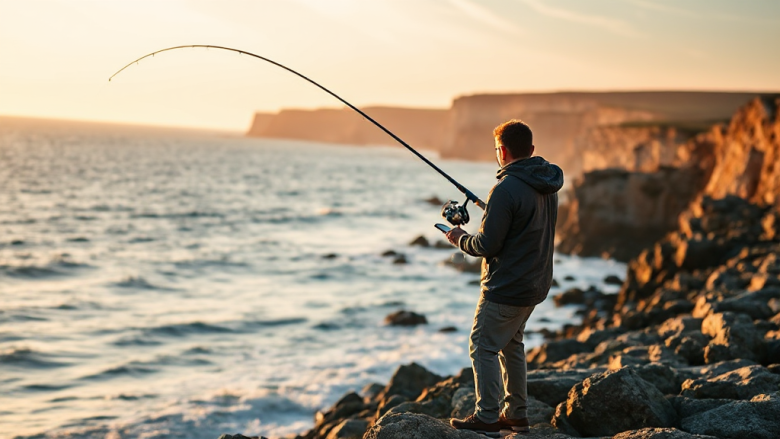
Picture a visitor staying in Cascais who has just bought a basic spinning rod. They want to fish the rocky shoreline at sunrise the next day. Here is the sequence that works.
Step one: confirm what you actually need. In mainland Portugal, recreational sea fishing from the shore or from a boat requires a licence issued through DGRM, the government body responsible for maritime resources. This applies whether you are a resident or a visitor, and whether you are fishing for an hour or a full day. Freshwater fishing is handled separately, so if your plan involves a river or reservoir, that is a different permit entirely.
Step two: gather the minimum information. The good news for visitors is that you do not need a Portuguese tax number (NIF) to apply, and you do not need to create an account on a government portal. You need your identifying details, the dates you intend to fish, and a payment method. That is genuinely the whole list.
Step three: complete the application. This is where most people expect friction and find none. An online application service walks you through the fields, handles the submission, and confirms the permit. Card, Apple Pay, and Google Pay are all accepted, which matters if you are travelling and do not want to enter long card details on a foreign site.
Step four: save your proof. Once the permit is issued, store a screenshot or PDF on your phone. If an inspector approaches you on the shore, showing a digital copy is normally fine, but a dead battery is not a defence, so keep a backup in your email or cloud storage.
Step five: go fishing. That is the result you came for. The permit covers recreational sea angling for the period you selected, and you can head straight to the coast.
Why people get stuck, and how to avoid the same traps
The friction almost never comes from the fishing itself. It comes from three predictable misunderstandings.
The first is assuming that shore fishing is exempt. It is not. A person casting a lure from a beach or a cliff is still engaged in recreational sea fishing and still needs the permit. The second is assuming that a short trip does not count. A single afternoon counts. The third is assuming the process requires a local address or a Portuguese bank card. It does not, which is exactly why so many visiting anglers now handle it online before they even land.
If you have been searching for portugal fishing information and finding only forum threads from years ago, that is because the practical route changed. The current sensible approach is to apply online, pay digitally, and keep the confirmation on your phone.
Variations for different anglers
The core process is the same, but the details shift depending on who you are.
Tourists on a short trip. Apply before you travel or on the morning of your first session. A multi-day permit usually makes more sense than a single-day one if you plan to fish more than once, because the price difference is small relative to the convenience.
Residents and long-stay visitors. If you fish regularly, look at the annual option rather than renewing a short permit every few weeks. Set a calendar reminder a couple of weeks before it expires so you are never on the rocks without cover.
Boat anglers. The same recreational licence framework applies. If you are chartering, ask the skipper whether the boat’s paperwork covers everyone aboard or whether each angler needs their own permit. The answer varies by operator, and it is a two-second question that prevents an awkward conversation at the dock.
Families and beginners. If you are introducing a child to the sport, check the age rules before you apply. Children are often covered under a parent’s permit or exempt below a certain age, but the specifics are worth confirming rather than assuming.
What the permit does and does not allow
A recreational sea fishing permit is not a free pass to take anything you like. It authorises recreational angling under the rules that apply to the area and the species. Bag limits, minimum sizes, closed seasons, and protected species all still apply, and they are enforced.
It also does not cover commercial activity. If you intend to sell your catch, you are outside the recreational framework entirely and need a different authorisation. For the overwhelming majority of people reading this, that is irrelevant, but it is worth stating plainly because the distinction is where fines originate.
What it does give you is peace of mind. You can fish a jetty at dawn, work a rocky point at dusk, or spend a full day on a charter without watching over your shoulder. For most anglers, that alone is worth the few minutes it takes to sort out.
Where to fish once you are licensed
Mainland Portugal rewards shore anglers enormously. The Atlantic coast offers surf beaches with bass and bream, rocky headlands with plenty of structure, and estuary systems that fish well on moving tides. The Algarve in the south is warmer and more forgiving in winter, while the central and northern coasts are more exposed and produce different species.
If you are new to fishing in portugal, start somewhere accessible and safe. Harbour walls and established beaches are easier to read than remote cliffs, and local tackle shops are generous with advice if you buy a few items and ask politely. Tide tables matter more here than in many places, so build your session around the tide rather than fighting it.
Respect the environment while you are there. Take your line and packaging home, avoid fishing in protected zones, and release fish you do not intend to eat. Access to good marks depends on anglers behaving well, and that is a collective responsibility.
Common questions that come up after the permit is issued
Once people have their permit, the follow-up questions are usually about logistics rather than legality. Do you need to print it? A digital copy is generally sufficient, but printing a spare costs nothing and removes all doubt. Does it cover every type of fishing? It covers recreational sea fishing within the terms you selected; check the specifics if your plans include spearfishing or collecting shellfish, which have their own rules. Can you fish the same day you apply? Yes, in practice the permit is issued quickly enough that same-day fishing is realistic.
What about freshwater? Separate system, separate permit. Do not assume your sea licence covers a river session.
Your next move
If you have read this far, you already know more than most people standing on a Portuguese beach with a rod in hand. The remaining step is the one that actually matters: apply, pay, save the confirmation, and go fishing. It takes about three minutes, it works from a phone, and it turns a potentially stressful morning into a simple one.
Do it before your next session rather than during it. Then pack your gear, check the tide, and enjoy the coast — licensed, informed, and free to concentrate on the fishing itself.